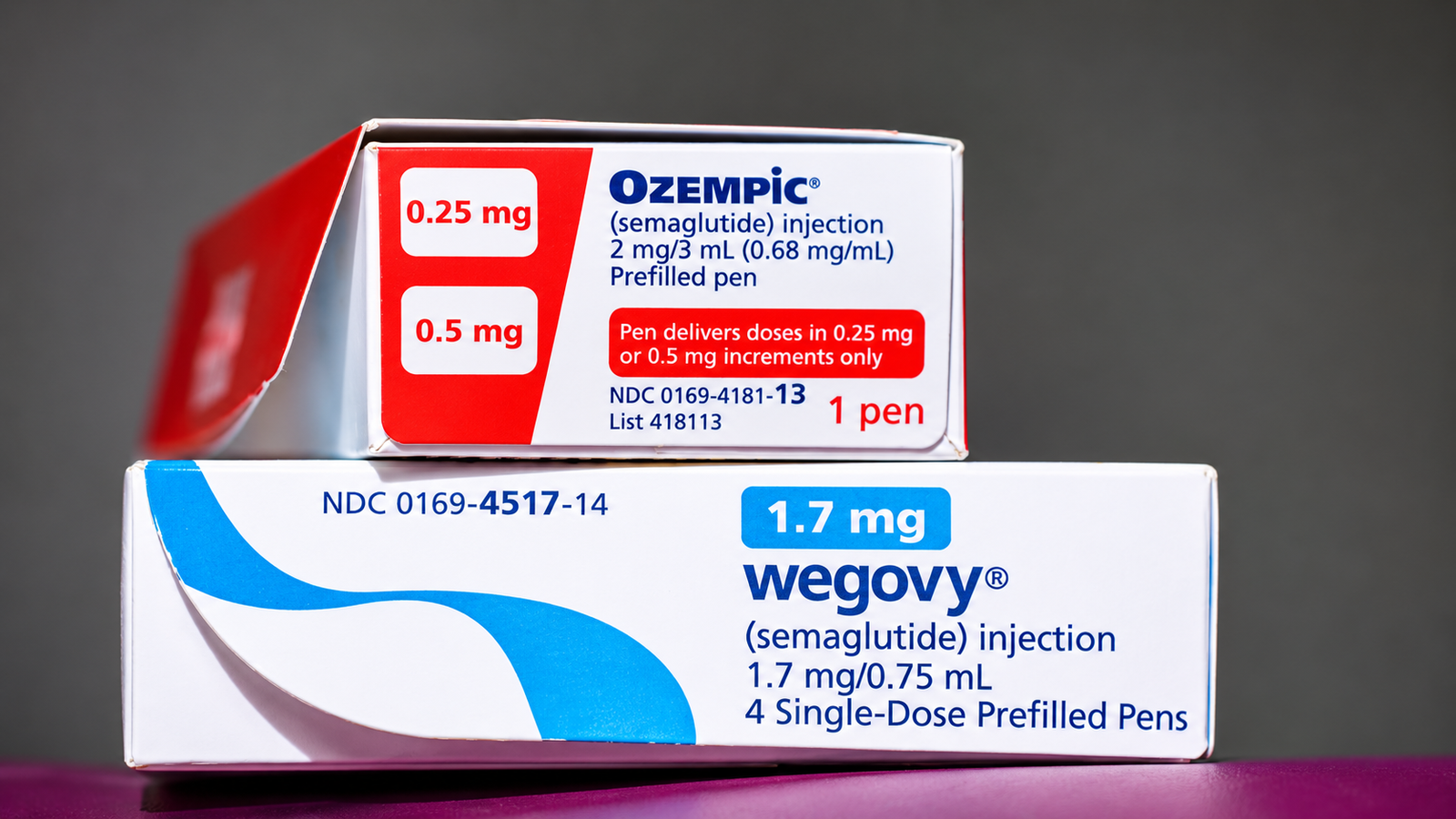
The U.S. Food and Drug Administration is requiring manufacturers of GLP-1 drugs, including Ozempic and Wegovy, to add a warning about a potential increased risk of a rare eye condition called NAION. The condition can cause sudden, painless vision loss in one eye. The FDA says the available evidence points to a potential association, but does not establish that the medicines definitively cause the condition.
Key Highlights
- The warning covers about a dozen GLP-1 drugs and was announced Monday, Nov. 9, CBS and Drugwatch reported.
- NAION stands for non-arteritic anterior ischemic optic neuropathy, a loss of blood flow to the optic nerve.
- The FDA’s analysis of 126 clinical trials found 6.4 NAION cases per 100,000 person-years among GLP-1 users, compared with 3.8 per 100,000 person-years among people taking placebo or non-GLP-1 glucose-lowering medicines.
- Novo Nordisk says the data “do not establish a cause-and-effect relationship.”
What the FDA Is Requiring
The FDA is requiring drugmakers to add a NAION warning to the “Warnings and Precautions” section of labels for all GLP-1 drugs, Drugwatch reported. The reports reviewed did not quote the label text or give an effective date.
CBS said the drugs include Ozempic, Wegovy, Mounjaro and Zepbound. Drugwatch also listed Trulicity, Saxenda, Victoza and Rybelsus.
What Is NAION?
CBS described NAION as an eye condition caused by reduced blood flow to the optic nerve. The FDA says the underlying cause is not understood.
Symptoms include blurred vision, blind spots and distorted colors, CBS reported. Fox Business said it typically brings sudden, painless vision loss in one eye and is most common in adults over 50.
The Evidence Behind the Warning
The FDA began reviewing the issue after a 2024 study linked semaglutide to NAION, CBS reported. Drugwatch identified it as a July 2024 JAMA Ophthalmology study.
The FDA’s meta-analysis included 126 randomized, controlled clinical trials involving 134,253 participants, according to the agency. Fox Business reported the same trial count but gave conflicting patient totals in its own text.
Drugwatch also reported that an insurance-data analysis found a higher NAION risk for GLP-1 users than for users of DPP-4 inhibitors, but no significant increase compared with SGLT-2 inhibitors.
Diabetes, high blood pressure and sleep apnea are NAION risk factors and are common among GLP-1 users, Fox Business reported. The FDA says that overlap makes it hard to attribute the risk to the drugs.
The American Academy of Ophthalmology puts the background rate in adults over 50 at 2 to 10 per 100,000 regardless of GLP-1 use, CBS reported.
How Drugmakers Responded
Novo Nordisk, which makes Ozempic and Wegovy, said it “continues to believe the data do not establish a cause-and-effect relationship” and remains confident in the drugs’ benefit-risk profile, CBS reported.
Eli Lilly, which makes Mounjaro and Zepbound, said it is “carefully evaluating the update.” It said the FDA communication applies to all GLP-1 medicines and does not reference findings specific to its own, according to CBS.
What Patients Are Being Told
Drugwatch, citing the FDA, reported that people with sudden vision loss in one eye should contact a health care provider immediately. It said patients who have had NAION should discuss with their doctor whether to keep taking the drug.
Dr. Joseph Rizzo, a neuro-ophthalmologist who co-authored the 2024 paper, said he believes the evidence shows GLP-1 use raises NAION risk. He does not discourage patients from taking the drugs, CBS reported.
This article is not medical advice. People taking these drugs should talk to their doctor before making changes.
What Is Still Uncertain
Scientists disagree on whether the drugs cause NAION. Reports also differ on how “permanent” the loss is. CBS cited Rizzo saying NAION vision loss tends to be irreversible, while Fox Business cited an unsourced figure that about 43% of significantly impaired patients improve spontaneously.
The European Medicines Agency listed NAION as a very rare side effect of semaglutide in 2025, Drugwatch reported. For other U.S. public health news, see our report on U.S. measles cases topping 5,100.
Watch: Coverage of the FDA Warning
Video: “FDA orders warning on popular GLP-1 weight loss drugs” (YouTube).
Sources
- FDA: Safety labeling changes for GLP-1 receptor agonists
- CBS News: GLP-1 drugs, popular for weight loss, get FDA warning of rare vision-loss side effect
- Fox Business: FDA orders new warning labels on Ozempic, Wegovy over rare risk of permanent vision loss
- Drugwatch: FDA Requires NAION Warning on All GLP-1 Drugs